
Key takeaways
- CIED remote monitoring improves clinical care and operational efficiency by giving clinicians continuous visibility into device status, reducing unnecessary in-person visits, and supporting earlier intervention
- Remote cardiac care platforms help clinics manage rising transmission volumes by consolidating data from all manufacturers, streamlining triage, automating documentation, and reducing administrative burden
- Choosing the right remote cardiac monitoring software depends on workflow efficiency, EHR integration, scalability, and long-term partnership, especially as clinics move from on-premises systems to modern cloud-based solutions
Managing implantable cardiac electronic devices (CIEDs) means navigating a continuous flow of patient data and the operational demands that come with it. Clinicians and administrators must process this data efficiently while maintaining high standards of care—without adding unnecessary strain to already busy teams.
Meeting this challenge requires strategic decisions about technology, staffing, clinical efficiency, and more. This FAQ guide dives straight into the operational questions that matter most—how to streamline workflows, understand the vendor landscape, and choose a software solution that truly simplifies your practice.
What is CIED remote monitoring?
CIED remote monitoring is the ongoing collection of patient and device data sent from pacemakers, implantable cardioverter-defibrillators (ICDs), cardiac resynchronization therapy (CRT) devices, and insertable cardiac monitors (ICMs) without requiring the patient to be in the office. Devices transmit through secure wireless technology—either directly or via a home communicator—allowing data to be sent automatically, in response to alerts, or through patient-initiated manual transmissions. All data arrives remotely, giving care teams prompt access to essential information, wherever the patient is.
A 2015 expert consensus statement—spearheaded by the Heart Rhythm Society (HRS) and reaffirmed in 2023—established a strong recommendation for remote monitoring as the standard of care for CIED follow-up.
CIED remote monitoring gives clinicians earlier visibility into device status and patient events, enabling proactive triage and rapid intervention without waiting for an in-person visit.
What are the benefits of CIED remote monitoring?
CIED remote monitoring delivers significant clinical and operational advantages for both patients and care teams. By enabling continuous oversight outside the clinic, it supports earlier detection of meaningful events, reduces unnecessary in-person visits, and strengthens overall cardiac device management.
Better ongoing support for cardiac device management
Remote monitoring allows clinicians to assess device performance and patient status between routine follow-ups. This visibility helps identify arrhythmias, device issues, or changes in patient condition sooner, enabling earlier adjustments to medications or treatment plans. Continuous observation has also been associated with fewer inappropriate ICD shocks, reduced hospitalizations, and improved disease management—especially for patients with heart failure (HF).
Fewer routine clinic visits
Because much of the necessary device evaluation occurs remotely, patients often do not need to come into the clinic as frequently for standard follow-up appointments. This reduces travel and scheduling burdens for patients while helping clinics reserve in-person time for those who truly need it.
More efficient clinical workflows
CIED remote monitoring reduces the reliance on manual, in-person device checks and allows teams to review information as it arrives, rather than only during scheduled visits. This helps distribute workload more evenly, limit administrative drag, and create a more manageable flow of clinical tasks. For busy CIED programs, this can translate into less staff fatigue and more time for direct, high-value patient care.
Improved documentation, compliance, and billing
When CIED remote monitoring is supported by consistent processes, it helps clinics stay aligned with documentation and billing requirements associated with CIED follow-up. Regularly received transmissions and timely reviews make it easier for teams to maintain compliance and ensure proper reimbursement for remote services.
Overall, CIED remote monitoring strengthens patient care, reduces avoidable clinic volume, and supports a more organized and responsive workflow for cardiac device teams.
How is CIED remote monitoring data used in clinic workflows?
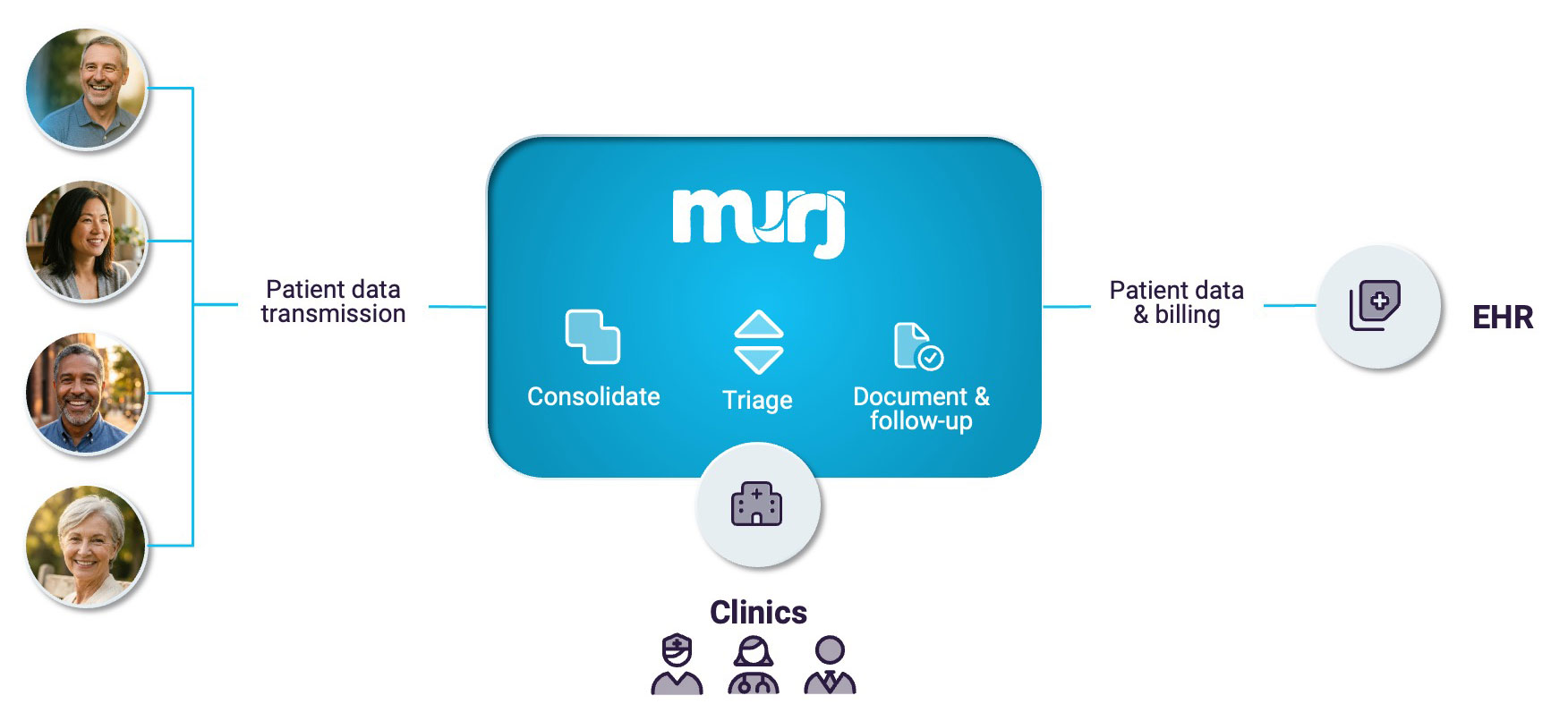
CIED remote monitoring data is designed to follow a defined sequence once it reaches the clinic, even though real-world workflows often vary. Understanding this intended pathway helps clinics make sense of rising data volumes and maintain a more organized, efficient workflow.
1. Transmission
Data is sent from the patient’s device—automatically, through alerts, or via manual send—using secure wireless communication. These transmissions flow to device manufacturer systems and then become available for clinic review.
2. Consolidation
Clinics gather transmissions from across all manufacturers to create a unified view of incoming data. Without consolidation, teams often navigate multiple device manufacturer portals, increasing the risk of missed reports or duplicate work.
3. Triage
Clinicians or device specialists review incoming transmissions, prioritize alerts, and determine which findings require follow-up. Effective triage ensures that urgent issues are addressed quickly while routine, stable findings are processed efficiently.
4. Documentation and follow-up
Reviewed transmissions are documented according to clinical and regulatory requirements. Findings are routed to the appropriate provider, added to the patient record, and used to guide any needed intervention, medication changes, or scheduling of an in-person visit.
5. Downstream data use
Once documentation is complete, CIED remote monitoring data may also support operational and administrative needs—such as care attribution, reporting, and reimbursement-related activities. While this work sits outside the immediate clinical workflow for triaging transmissions, some clinics look to reduce administrative burden by limiting redundant data handling through automation.
In many clinics, the need to navigate multiple device manufacturer portals during the data consolidation phase creates bottlenecks that ripple into triage, documentation, and overall patient management—an area where remote cardiac monitoring software can ease the burden and bring greater workflow stability.
What is a remote cardiac care platform?
A remote cardiac care platform is software that centralizes remote monitoring for every CIED type across your entire patient population. Instead of navigating multiple manufacturer portals, clinics use a single system to view incoming transmissions, triage alerts, document findings, route reports, and support billing for all devices in one place.
These platforms are built to streamline the clinical workflow, reduce administrative friction, and help teams stay organized as remote monitoring volumes grow.
What are the key benefits of using a remote cardiac care platform?
A modern remote cardiac care platform is built to support the full CIED workflow—from intake to documentation—by removing the operational friction that slows many clinics today. When consolidation, triage, and documentation are streamlined, teams can shift their time and attention back to high-value patient care. Core benefits include:
Streamlined operational support for cardiac device care teams
Modern platforms centralize incoming transmissions, eliminate the need to toggle between manufacturer portals, and automate routine steps. This reduces administrative burden, supports clearer prioritization, and helps teams stay organized as device volumes grow.
Greater efficiency and reduced staff burnout
Automation and unified workflows cut down on repetitive tasks, improve visibility across the device population, and help teams stay ahead of rising transmission volumes without increasing staffing pressure.
Improved compliance and billing capture
Modern platforms standardize documentation, reduce error-prone manual work, integrate with EHR systems, and ensure required reports and billable events are consistently recorded—supporting both clinical quality and financial performance.
Together, these capabilities help clinics regain control of growing data demands and establish a more sustainable, reliable CIED management workflow.
Cloud vs. on-premises remote cardiac care platforms: What’s the difference?
The remote cardiac care monitoring space includes a range of independent platforms designed to help clinics manage growing transmission volumes, streamline workflow, and consolidate data across all manufacturers. Cardiac device remote monitoring companies vary widely in maturity, feature depth, interoperability, and support models. Some offer basic consolidation and alert review tools, while others provide full end-to-end workflow management, documentation support, EHR connectivity, analytics, and billing capabilities.
Deployment models: Cloud vs. on-premises
Remote cardiac monitoring software is delivered in two primary ways—cloud-based or on-premises (on-prem)—each with distinct implications for clinic operations and IT resources.
Cloud-based platforms
Cloud solutions like Murj® are accessed through the web, require no local servers, and scale easily as device volumes grow. Updates, security improvements, and new features are deployed automatically—without burdening internal clinic IT teams. This model supports faster innovation cycles and reduces downtime associated with manual upgrades.
On-prem platforms
On-prem solutions like PaceArt are installed locally (“on the premises”). Clinics are responsible for implementing, configuring, and maintaining the software on their own hardware infrastructure. This model offers direct control over the environment but comes with higher ongoing maintenance demands, longer upgrade cycles, increased IT coordination, and greater responsibility for system performance and uptime.
Overall, the choice between cloud and on-premise platforms directly affects efficiency, long-term sustainability, and a clinic’s ability to adapt as remote monitoring demands continue to rise.
How to choose the right remote cardiac monitoring software partner
Selecting a cardiac device remote monitoring company is ultimately a long-term clinical and operational decision—not just a technology purchase. The right partner should reduce the strain of rising transmission volumes, bring clarity to complex workflows, and integrate cleanly into existing systems and routines.
When evaluating potential partners, clinics should look for:
1. Workflow clarity and efficiency
A strong platform should simplify how transmissions are consolidated, triaged, documented, and routed—not add new steps. Look for tools that reduce administrative burden, eliminate duplicative work, and give staff the visibility they need to manage growing device populations with confidence.
2. Meaningful time savings
Remote monitoring workloads rise every year. Choose a partner that helps your team work smarter: fewer clicks, fewer logins, fewer manual tasks, and faster identification of the transmissions that matter most.
3. Robust EHR integration
Integration should support—not complicate—clinic operations. Reliable EHR connectivity ensures that data, reports, and documentation flow cleanly into the patient record, reducing the risk of errors and removing the need for manual uploads or workarounds.
4. Scalable technology that keeps pace with growth
The platform should evolve with your clinic. Features, security updates, and performance improvements should be delivered consistently over time so the system remains stable and future-ready. This is where cloud-based software has a leg up.
5. A partner, not just a vendor
Cardiac device management is a continuous, high-volume workflow that requires reliable support. Strong training, ongoing responsiveness, and a collaborative approach are essential. The right partner will invest in helping your clinic adapt, refine processes, and ensure sustained success with remote monitoring.
Choosing well ensures not only a smoother remote monitoring workflow today, but a durable, scalable foundation for the years ahead.
Dive deeper
Looking for more insight into CIED remote monitoring and clinic workflow improvement? Explore our related resources on scaling device operations, strengthening clinical efficiency, and transitioning from legacy systems to modern, cloud-based solutions. These resources offer practical perspectives to help clinics stay organized, reduce administrative strain, and support high-quality care as device volumes grow.
Cloud vs. on-premises software: How cloud-based solutions enhance efficiency in CIED care
Compare cloud-based and on-prem software in the context of CIED management, and learn about the advantages of cloud technology for enhancing operational efficiency, patient care, and clinic financials.
How to optimize CIED clinic staffing
Learn how to strengthen staffing, streamline workflows with modern tools, and partner with vendors who can reliably extend your team.
How Deborah Heart and Lung Center slashed remote monitoring workload by 33% and unlocked $663K in new revenue
See how Murj helped Deborah cut workload and drive meaningful revenue gains while advancing key operational and care goals.